
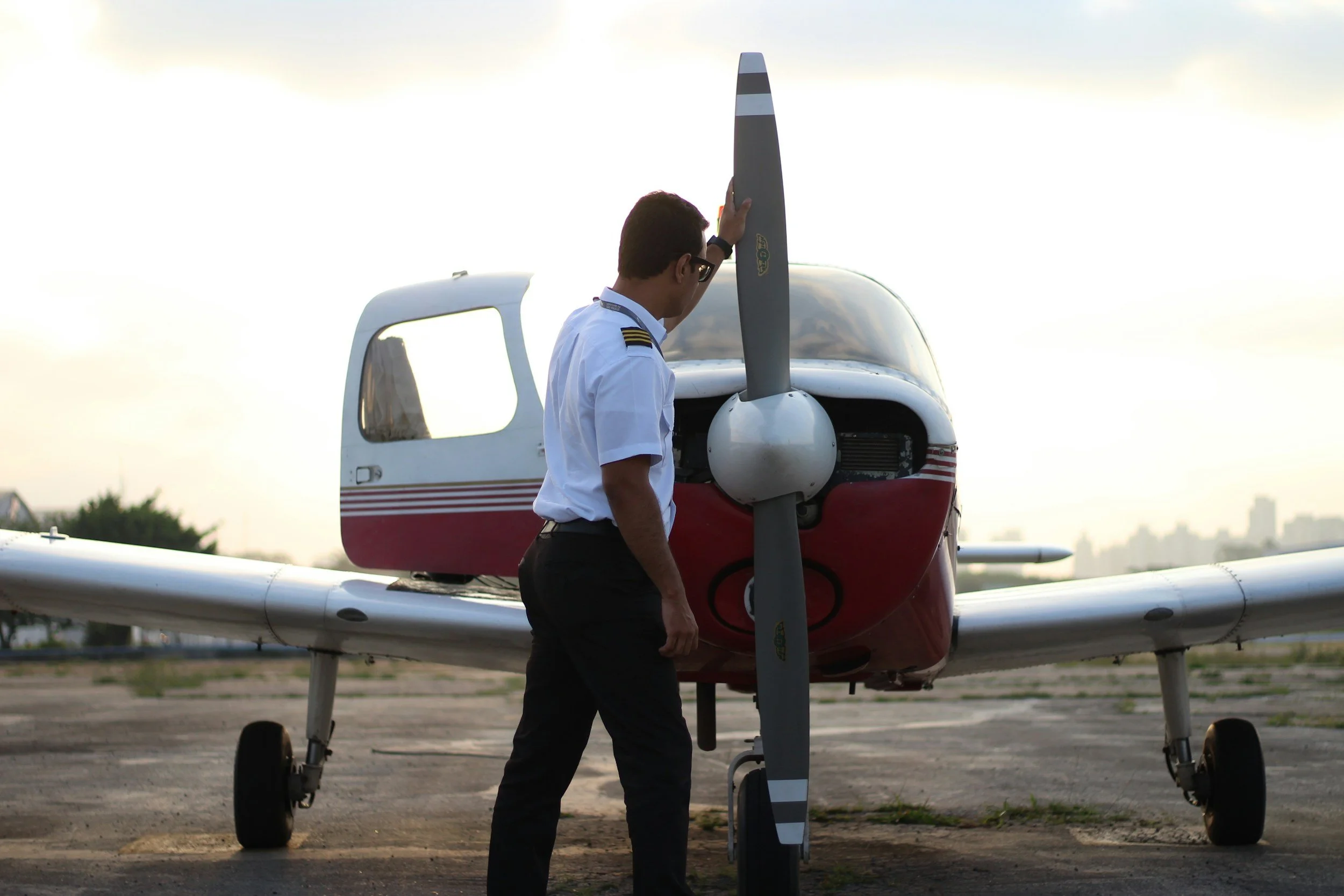
Commercial Pilot Rating
A commercial pilot license, or certificate, is a type of pilot license that allows someone to operate an aircraft for compensation.
Last updated: April 2026 | Reference: 14 CFR §61.123
What is a commercial Pilot License?
A licensed commercial pilot may act as pilot-in-command of an aircraft for compensation or hire, as well as carry persons or property for compensation or hire. To put another way, holding a commercial pilot license means you are legally allowed to get paid to fly as a pilot, transport cargo and passengers, as well as perform other operations such as aerial surveying and search and rescue.
What is the Difference Between Commercial Pilots and Airline Pilots?
Airline pilots operate regularly scheduled passenger flights. To fly as an airline pilot, you must have an Airline Transport Pilot (ATP) certificate, which is the highest pilot license the FAA issues. However, all pilots must first start by earning their private pilot license and then their commercial pilot license, before they can attain an ATP certificate.
What Are the Eligibility Requirements for a commercial Pilot license?
In order to be eligible for an FAA commercial pilot license, a person must be at least 18 years of age; and be able to read, speak, write, and understand the English language.
Reference 14 CFR §61.123 for the entire list of eligibility requirements.
-
To earn a commercial pilot certificate, a pilot must:
Hold a private pilot license.
Receive the following logbook endorsements from an instructor:
Logbook endorsement to take the aeronautical knowledge test.
Logbook endorsement to take the practical test.
Pass the following tests:
Commercial pilot knowledge test (often referred to as a 'written' and abbreviated CAX).
Commercial pilot practical test (also known as a 'checkride').
Reference 14 CFR §61.123 for a complete listing of all requirements.
-
To qualify for a Commercial Pilot Certificate, students must meet the following FAA flight experience requirements:
Total Flight Time: 250 Hours
Pilot-in-Command (PIC): 100 Hours
Cross-Country PIC: 50 Hours
Instrument Training: 10 Hours
Technically Advanced Airplane (TAA): 10 Hours
Reference 14 CFR §61.129 for more details on flight time requirements.
-
In order to exercise the privileges of a commercial pilot license, you must hold either a second- or first-class medical certificate, which can be obtained through an aeromedical examiner (AME).
Commercial pilots are subject to certain health standards, such as vision, hearing, equilibrium, mental, neurologic, and cardiovascular requirements. For a complete list of the health requirements for obtaining a second-class medical and flying as a commercial pilot reference CFR 14 §67 Subpart C.
-
Once you’ve completed the required flight training, you’ll be eligible for the FAA Practical Exam — commonly known as the checkride.
The checkride is administered by a designated FAA examiner and includes two parts: an oral exam followed by a flight test. The flight portion is only conducted after successfully passing the oral exam.
If both parts are completed successfully, the examiner will assist with your FAA paperwork, and you’ll be issued a temporary Commercial Pilot License. This allows you to fly as a commercial pilot while you wait for your official FAA certificate to arrive in the mail.