
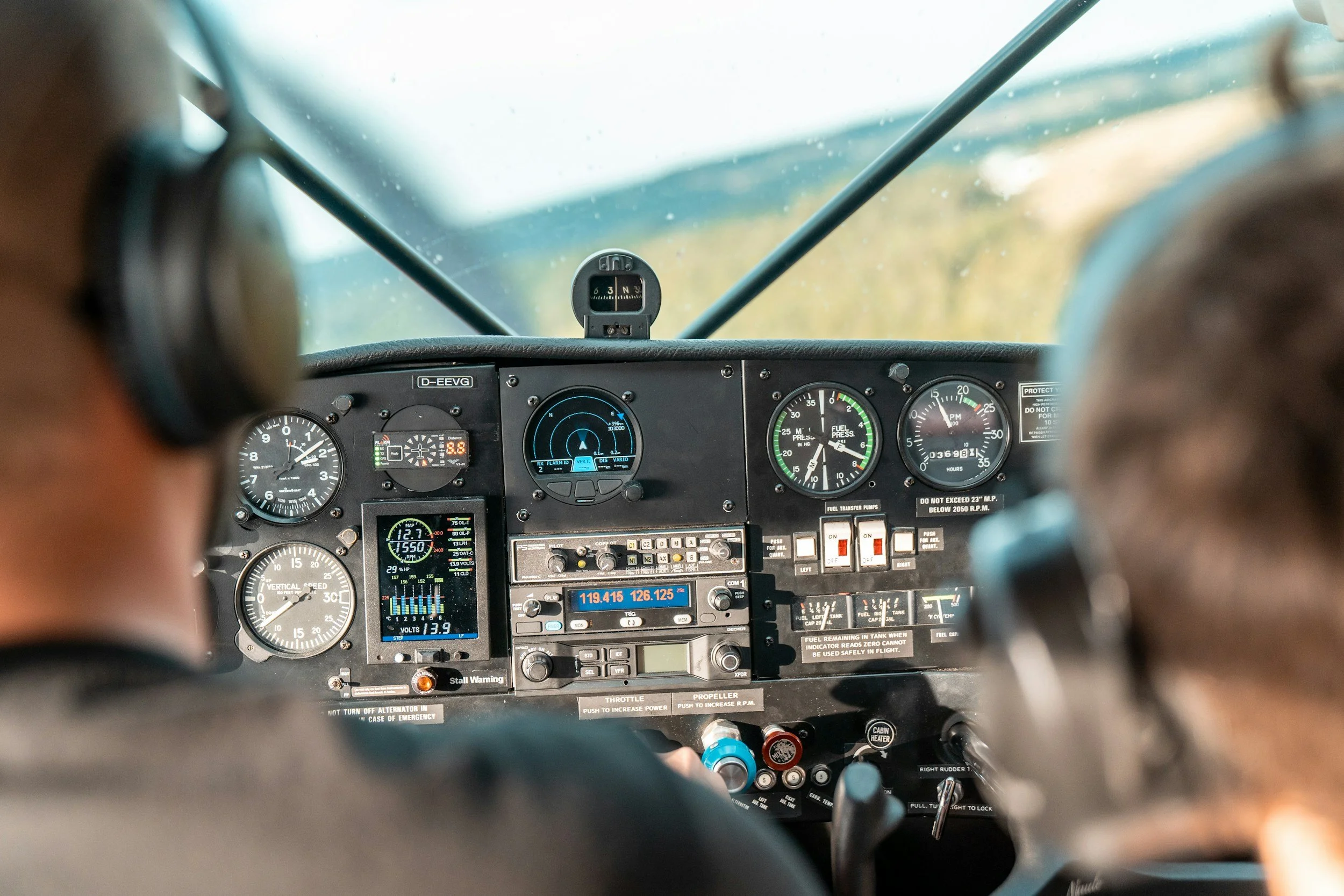
CERTIFIED FLIGHT INSTRUCTOR RATING (CFI / CFII)
A Certified Flight Instructor (CFI) is a qualified pilot authorized to train and mentor students through every stage of flight training, from first takeoff to checkride. A CFII (Certified Flight Instructor – Instrument) is a CFI who is specifically authorized to teach pilots how to fly using instruments.
Last updated: April 2026 | Reference: 14 CFR §61.183
Why Getting Your CFI & CFII Matters
Getting both your Certified Flight Instructor and Certified Flight Instructor Instrument is one of the most effective ways to build time, sharpen your skills, and create a meaningful flying career—especially if you enjoy teaching.
Why it’s valuable:
Build flight time and experience efficiently (and get paid for it)
You’re logging Pilot in Command (PIC) time while earning income, which makes it one of the fastest paths toward advanced aviation goals.Become a stronger, more precise pilot
By teaching students how to safely and effectively operate aircraft, flight instructing also reinforces the knowledge you gained during your own flight training.Share the joy of flying with others
If you enjoy teaching, this becomes one of the most rewarding parts of flying. Helping someone go from zero to solo or instrument-rated is incredibly fulfilling.More opportunities and consistency with CFII
Adding CFII keeps you active in the IFR system — flying approaches, working with ATC, and training in a wider range of conditions.
CFI lets you teach flying fundamentals. CFII lets you teach instrument flying. Together, they let you fly more, earn more, and grow faster — while doing something meaningful.
What Are the Eligibility Requirements for a Private Pilot Certificate?
To earn a Certified Flight Instructor certificate, applicants must already hold a Commercial Pilot Certificate, be at least 18 years old, and meet English proficiency requirements. They must complete instructor training, pass the required FAA written exams, receive instructor endorsements, and pass a practical test with an FAA examiner that includes both oral and flight portions.
To add a Certified Flight Instructor Instrument rating, applicants must already hold a CFI and an Instrument Rating, complete additional instrument instructor training, pass the FAA instrument instructor written exam, and successfully complete an FAA practical test with oral and flight portions focused on instrument instruction.
-
Be 18 years of age
Read, speak, write and understand the English language
Hold either a commercial pilot certificate or airline transport pilot certificate and an instrument rating
Have logged at least 250 hours of flight time
Hold a valid FAA 3rd Class Medical Certificate (or higher)
Receive a logbook endorsement from an authorized instructor on the fundamentals of instructing
Pass a knowledge test on the aeronautical knowledge areas appropriate to the flight instructor rating sought
Reference 14 CFR §61.183 for the entire list of eligibility requirements.
-
According to federal regulations, you must meet the following aeronautical flight experience requirements to earn a private pilot license. At a minimum, private pilot candidates qualified for the practical test will have logged 40 hours of flight time that includes 20 hours of flight training from an authorized instructor as well as 10 hours of solo flight. The training must include:
3 hours of cross-country flight training
3 hours of night flight training consisting of:
One cross country flight over 100 nautical miles total distance
10 takeoffs and 10 landings to a full stop with each landing involving a flight in the traffic pattern at an airport
3 hours of flight training on control and maneuvering solely by reference to instruments
3 hours of flight training with an authorized instructor in preparation for the practical test within the preceding 2 calendar months from the month of the test
10 hours of solo flight time consisting of:
5 hours of solo cross-country time
One solo cross country flight of 150 nautical miles total distance with full stop landings at three points and one segment of the flight consisting of a straight line distance of more than 50 nautical miles between takeoff and landing locations
Three takeoffs and three landings to a full stop (with each landing involving a flight in the traffic pattern) at an airport with an operating control tower
-
Total Flight Time: 40 Hours
Cross-Country Flight Time: 3 Hours
Night Flight Time: 3 Hours
Instrument Training: 3 Hours
Training with Authorized Instructor: 3 Hours
Solo Flight Time: 10 Hours
Reference 14 CFR §61.109 for more details on flight time requirements.
-
In order to exercise the privileges of a private pilot license, you must hold a third-class medical certificate, which can be obtained through an aeromedical examiner (AME). This should be done early on in training as you will not be able to solo an airplane without your medical certificate. Certificates must also be renewed periodically. If you are under the age of 40, this is every 60 months. While if you are over the age of 40, you must renew your medical certificate every 24 months.
-
Once you’ve completed the required flight training, you’ll be eligible for the FAA Practical Exam—commonly known as the checkride.
The checkride is administered by a designated FAA examiner and includes two parts: an oral exam followed by a flight test. The flight portion is only conducted after successfully passing the oral exam.
If both parts are completed successfully, the examiner will assist with your FAA paperwork, and you’ll be issued a temporary Private Pilot Certificate. This allows you to fly as a private pilot while you wait for your official FAA certificate to arrive in the mail.
-
Unlike other flight ratings, the flight instructor certificate must be renewed every twenty-four months. Flight instructors may find that whichever option is chosen, the flight instructor certification is a great privilege to have. It is recommended to never let it lapse, so you can continue to share in the joy of teaching others to fly throughout your long and rewarding aviation career.
There are many ways a flight instructor certificate can be renewed:
Complete an approved flight instructor refresher course (FIRC).
Flights instructors may opt to obtain an additional flight instructor certificate, or complete a practical test for one of the flight instructor certificates they have already obtained.
Endorse at least 5 students for a practical test with at least an 80% first-attempt pass rate, or meet certain requirements involving the regular evaluation of pilots, usually within an air carrier company.
An official U.S. Armed Forces military instructor pilot proficiency check is also an option.